 by
by Connectivity is the lifeblood of our modern world. Future of Connectivity is the invisible architecture supporting everything from global finance to our morning video calls. For the last decade, 5G technology has been the star of the show, laying down a superhighway of unprecedented speed and responsiveness. But this highway was never the final destination. It was merely the foundation for a world we are only now beginning to build.
We are on the cusp of a paradigm shift in how we experience the digital world. The future of connectivity is being forged by a trinity of transformative technologies: the mind-bending potential of 6G, the global reach of Low Earth Orbit (LEO) satellite internet, and the ultra-fast reliability of Wi-Fi 7. This is not just an incremental upgrade; it is a fundamental re-imagining of our relationship with technology.
Phase One Complete: Why 5G Was the Critical First Step
Before we can appreciate the future, we must understand the present. 5G was a monumental leap, introducing capabilities that set the stage for everything to come. It wasn’t just about faster movie downloads; it was about creating a network that could support the next generation of technology through three pillars:
- Enhanced Mobile Broadband (eMBB) : Delivered the gigabit speeds necessary for 4K/8K streaming and immersive AR/VR.
- Ultra-Reliable Low-Latency Communication (URLLC): Provided the near-instantaneous feedback required for critical applications like autonomous vehicles and remote robotic surgery.
- Massive Machine-Type Communications (mMTC): Enabled the connection of millions of tiny IoT sensors per square kilometer, kickstarting the smart device revolution.
In essence, 5G built the robust infrastructure. Now, the next wave of innovation is ready to unleash its true potential
The Next Frontier: Unpacking the Promise of 6G Technology
If 5G was about connecting people and things, 6G is about fusing the physical, digital, and biological worlds into a single, intelligent fabric. While experts predict it could be up to 100 times faster than 5G, speed is the least interesting part of the 6G story. The real revolution lies in its entirely new capabilities.
AI-Native by Design
Unlike previous generations where AI was a feature added on top, 6G networks are being designed as AI-native systems . This means the network itself will be a cognitive entity, capable of self-management, predictive resource allocation, and instant self-healing. As telecom visionaries at firms like Nokia are exploring , this will create a network that is not just connected, but aware
Sensing the World as a Network
6G will utilize ultra-high-frequency Terahertz (THz) bands . These waves can carry immense data loads, enabling futuristic applications like real-time holographic calls. But even more impressively, these signals can act as a form of radar. This “sensing-as-a-service” capability will allow the network to map environments, detect objects, and even interpret gestures without any dedicated sensors, turning our entire connected environment into an interactive space.
Connecting Every Corner: The LEO Satellite Internet Revolution
While 6G will redefine urban connectivity, a parallel revolution is happening in the skies. Low Earth Orbit (LEO) satellite internet is the definitive answer to the global digital divide, aiming to connect the billions still left without reliable internet.
How LEO Satellites Work
Unlike traditional satellites orbiting thousands of miles away, LEO constellations, like SpaceX’s Starlink, consist of thousands of satellites swarming just a few hundred miles above Earth. This proximity dramatically cuts down latency, making it a viable alternative to fiber-optic broadband. As chronicled by tech blogs covering the rise of Starlink , this technology provides a lifeline for remote, rural, and underserved communities worldwide.
The impact is profound, offering everything from disaster relief communication when ground networks fail to high-speed internet on airplanes and ships. With giants like Amazon’s Project Kuiper entering the race, the sky is becoming a competitive frontier for global connectivity.
The Home and Office Transformed: Why Wi-Fi 7 is a Game-Changer
The future of connectivity isn’t just external; it’s about revolutionizing our personal spaces. As our homes become dense with smart devices, 4K/8K TVs, and immersive VR headsets, our Wi-Fi is being pushed to its limits. Wi-Fi 7 (IEEE 802.11be) is engineered to solve this congestion.
The Power of Multi-Link Operation (MLO)
Wi-Fi 7’s signature feature is Multi-Link Operation (MLO) . As explained by industry leaders at the Wi-Fi Alliance , MLO allows a device to connect to a router using multiple radio bands (2.4 GHz, 5 GHz, and 6 GHz) at the same time. It’s like turning a single-lane road into a multi-lane superhighway for your data, resulting in near-zero latency and unprecedented stability. This will finally deliver a wireless experience that is indistinguishable from a wired connection, perfect for cloud gaming and high-fidelity metaverse experiences.
The Unifying Vision: Powering the Massive Internet of Things (IoT)
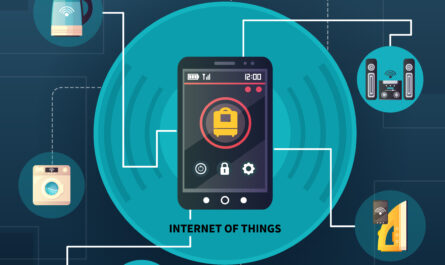
What is the ultimate goal of this multi-layered, hyper-fast, intelligent network? To create the backbone for a truly massive and intelligent Internet of Things (IoT). This new network will support trillions of devices, generating an unimaginable amount of data that can be used to optimize our world.
Leading research firms like Gartner predict a future where IoT devices outnumber humans by more than ten to one. This will enable:
- Cognitive Cities: Where 6G networks intelligently manage everything from traffic flow to emergency services.
- Automated Industries: From precision agriculture on remote farms powered by satellite internet to smart factories running on private 5G/6G networks.
- Hyper-Personalized Healthcare: Where wearable sensors are in constant communication with AI systems to provide proactive and predictive health monitoring.
Conclusion: From a Connected World to a New Reality
The future of connectivity is not a single technology but a symphony of innovations working in harmony. 6G, LEO satellites, and Wi-Fi 7 are not competitors; they are layers of a single, unified digital fabric that will envelop our planet. As global thought leaders at the World Economic Forum have stated, this next-level infrastructure is essential for the next era of human progress. We are moving beyond an age of accessing the internet and into an age of living within it.